Usha


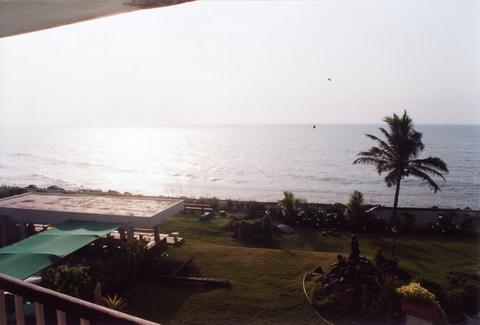
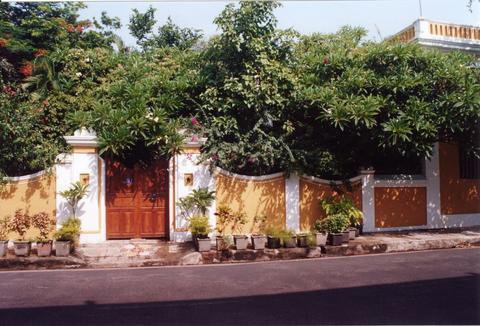
Spent the weekend in Pondicherry. Could not help being charmed by the architecture and the odd blend of French and Tamil culture and the peace that one felt as soon as one was inside the Ashram. All this in spite of the merciles heat against which the sea breeze was powerless.And yet no one seemed to notice it except us. Made one wonder if the heat was just a state of mind or was it really that hot?


Another thing that I always find in coastal places and islands is the attitude to time. On the day we arrived, when we tried to draw up the schedule for the day Priyamvada, who is from Pondicherry, told us that the motto in pondicherry is to "take your time with time" and not to hurry about the day. I have seen the same in Goa, Mauritius, Maldives and Srilanka too. They seem to ignore the clock and go more by the calendar.Perhaps they go by the bigger picture that Life is too large to be split into minutes and seconds and worried about.Generally they are happy with what they have, do not fret too much and exhibit a great resilience to hardship and suffering.They do not brood too much and bounce back quite easily. Does the sea teach them that?


On another note, how come the same is not true of places like Chennai or Mumbai which are bordered by the sea too?
Usha
Are you,like me, put off by the sheer number of implements placed on a dinner table at formal parties or high class restaurants? Do you lose your appetite when you are forbidden to eat with your fingers? Are you from a culture that believes in tasting food and expressing appreciation of it audibly and visibly? Do you crave to lick your fingers after a nice spicy meal?

Then you will love this delicious piece from "The importance of Living by Lin Yutang:

"The Chinese idea of happiness is,as I have noted elsewhere, being "warm, well filled, dark and sweet"- referring to the condition of going to bed after a good supper. It is for this reason that a Chinese poet says, "A well filled stomach is indeed a great thing; all else is luxury." With this philosophy.therefore, the Chinese have no prudery about food, or about eating with gusto. When a chinese drinks a mouthful of good soup, he gives a hearty smack. Of course, that would be bad table manners in the West. on the other hand, I strongly suspect that Western table manners, compelling us to sip our soup noiselessly and eat our food quietly with the least expression of enjoyment, are the true reason for the arrested development of the art of cuisine. Why do the Westerners talk so softly and look so miserable and decent and respectable at their meals? Most Americans haven't got the good sense to take a chicken drumstick in their hand and chew it clean, b ut continue to pretend to play at it with a knife and fork, feeling utterly miserable and afraid to say a thing about it. This is criminal when the chicken is really good. As for the so-called table manners, I feel sure that the child gets his first initiation into the sorrows of this life when his mother forbids him to smack his lips. Such is humn psychology that if we don't express our joy, we soon cease to feel it even, and then follow dyspepsia, melancholia, neurasthenia and all the mental ailments peculiar to the adult life. One ought to imitate the French and sigh an "Ah!" when the waiter brings a good veal cutlet, and makes a sheer animal grunt like "Ummm!" after tasting the first mouthful. What shame is there in enjoying one's food, what shame in having a normal, healthy appetite? No, the chinese are different. They have bad table manners, but great enjoyment of a feast."

The Chinese seem to have their priorities right much like the members of the clan I come from. The enjoyment of the meal begins in our household even before the meal is cooked. The women discuss the menu and the right accompaniments to each dish . (Paruppu usili has to have morkozhambu and not any other sambar) and then the preparation is done with great care. After serving the meal, the person tasting the food is carefully watched for spontaneous reactions and then the women feel elated. They must be High-fiving each other in the kitchen out of excitement. On the contrary, if the food is eaten in total silence that is taken as a failure and the women folk spend the rest of the day depressed. And greater and greater care goes into the cooking until some visible , audible appreciation is elicited and then they feel that their existence is justified! I guess this is a value that one no longer associates with current generations who are more into fast food and spoon and tissue culture. What a colossal loss!
Usha
When I list the values and principles that are most important to me even today, I realise that most of them were formed in my adoloscence. These were not given as abstract ideals to be followed but one saw them in the personality of people one interacted with - mostly the teachers and friends in high school and close family members. I look around and find that today schools have become more like very efficient training grounds in the various fields of knowledge;Caught in this hectic process,overloaded teachers have no time to concentrate on character building. This void is clearly seen when one comes across phenomenal blunders of high performers - to quote a recent example, Kavya Vishwanathan.
Parents are equally to blame as their expectation from the school is to make their child worthy of IITs and IIMs or any highly paid profession. Perhaps it is time every parent read the mail that Abraham Lincoln sent to his son's headmaster and see if their child is being given an environment where he can imbibe these timeless values:

"He will have to learn. I know that all men are not just and all men are not true. But teach him also that for every scoundrel there is a hero; that for every selfish politician there is a dedicated leader. Teach him that for every enemy there is a friend. It will take him, I know, but teach him, if you can, that a dollar earned is of far more value than five found. Teach him to learn to lose and also to enjoy winning, steer him away from envy, if you can; teach him the secret of quiet laughter.

"Let him learn early that the bullies are the easiest to lick; Teach him, if you can the wonder of books but also give him quiet time to ponder the eternal mystery of birds in the sky, bees in the sun and flowers on a green hillside. In school, teach him it is far more honorable to fail than to cheat. Teach him to have faith in his own ideas, even if everyone tells him he is wrong. Teach him to be gentle with gentle people, and tough with the tough.

"Try to give my son the strength not to follow the crowd when everyone is getting on the band wagon. Teach him to listen to all men, but teach him also to filter all he hears on a screen of truth, and take only the good that comes through.

"Teach him, if you can, how to laugh when he is sad. Teach him there is no shame in tears. Teach him to scoff at cynics and to beware of too much sweetness. Teach him to sell his brawn and brain to the highest bidder, but never to put a price tag on his heart and soul. Teach him to close his ears to a howling mob and to stand and fight if he thinks he's right.

"Treat him gently, but do not cuddle him, because only the test of fire makes fine steel. Let him have the courage to be impatient; let him have the patience to be brave. Teach him always to have sublime faith in himself, because then he will always have sublime faith in mankind.
"This is a big order, but see what you can do. He is such a fine little fellow, my son."

All children are such fine little creatures - let us show them not just the goals but also the right way to get there.
(Thanks Shalini, your mail provided the thought for this post!)
Usha
I shall never forget our visit to this house - it was a colleague of my husband's. She and her businessman husband lived in a large, comfortable house in one of the best addresses in town. I was prepared for some display of wealth and comfort and good taste but what I actually saw was something straight out of inside outside magazine or the television shows on good living.
Everything in the house stayed exactly in the place where it was meant to be, not a newspaper out of place. The sink was totally empty and dry. Did they not even drink water and leave glasses lying around on the table or the sink? And the bathroom? how can it be so fresh and dry? Did anyone ever use the bathrooms in the house or were you expected to wash and wipe it after every use? What about the dust from the roads? Was it also scared away from such perfection that it dared not enter this house?
I thought to myself- "well perhaps it is possible to keep a house like this if you didnt have children". Children have a beautiful way of bringing chaos into ones life and making you accept the inevitability of it. Just as i was thinking these thoughts, in walked two smartly dressed kids, 7 and 9, and wished us. They walked and talked and handled all the crystal and expensive crockery with so much poise and delicacy. And when they picked up something it went back exactly to the same place. They had obviously been trained since birth.

This was just too much - that they actually lived in this hell of super perfection. I wondered what it must be like for them to live with so much order and discipline. Would they grow up into order obsessed people who would crack up at the slight sign of disorder? Could they ever eat out without noticing all the dust and dirt or actually falling sick due to lack of resistance? Was it not the privelege of children to be disorderly, disobedient and messy? was it not an exposure necessary for a balanced personality development? Were the disorderly sides of these children repressed and would it manifest in violent ways somewhere totally unexpected?
Were the parents giving them a kind of life that Siddhartha, the prince enjoyed until his first exposure to all the ugly aspects of life. Would an encounter with reality be a great shock to them when and if it happens?
Anyways, I was very happy to get out of the house without dropping anything on the table or staining the napkin or spilling water around the wash basin although I must admit that I had a secret vicious desire to drop my plate on the ground and check for the reaction from the members of the house!Of course better sense prevailed butI have never been happier to return to the chaos of my life.
Usha
In almost all communities, themes and characters in stories have been used as a way to instil some values and as a successful means of character-building in children. These stories are passed by the families down the generations or included in the books as part of their school syllabus. Some of them have actually become dated with changing times and merit a relook. We do have publications in the west of "politically correct" bed time stories and "politically correct" bible stories etc...Without going that far, I can think of a few stories which I have questioned during the process of growing up.
For example there is this story which all children in our family know. It is about this young girl living with her step mother and a wicked (surprise surprise!) step-sister. One day her stepmother turns her out of the house for some minor unwitting lapse and as she wends her way through the forest crying she meets an old woman who is stern but relents to let her spend the night in her hut. Everytime the old lady gives the young girl a choice of boarding preferences (ex: warm water or coldwater for bath? old dress or a new one for changing into? left over food or fresh food?) the girl, as she is accustomed to hardship, chooses the modest option. But she is actually rewarded with the best dress, expensive gifts, a festive meal and of course pleanty of warm water for a bath. When she returns home with all these, the step mother is pleased and the greedy step-sister decides to go to the old lady's house hoping to claim her share of goodies. She is given the same objective choices and ( in spite of the other sister leaking the paper)) ticks all the wrong answers and is sent home with a nice thrashing.
Moral of the story? Greed is punished while humility and modesty are always rewarded.
Needless to say, the modest one was the role model till one went to college. There one met "go-getters" and were told to "hitch your wagon to the star" and that is when one began to question if stories such as the above blunted the edge of ambition and let you be too complacent and satisfied with what you demand from the world. Vaish has a nice post on Casabianca where she raises some good questions too.

Other characters which seemed so worship-worthy on the screen or in books include the ever-sacrificing woman who would burn herself like a candle to give light to others; who would subject herself to exploitation just to save her family from trouble; who would allow herself to be held to ransom for the sake of her love without uttering a word to anyone,even while being aware of all her legal rights. Time was when such women seemed worthy of a shrine but now such behaviour makes no sense to me - it seems that they need a good psychiatrist as there must be something very wrong with such women (sado-masochistic tendencies). Laws are there to be enforced dammit - Keeping quiet when you are raped or abused is not endurance, it is abetting in a crime. What has education taught you?

And then there is the story of men like Jay gatsby where the woman he loves does not consider him good enough for her ( rich enough sometimes) and so he spends all his life proving to himself that he can make it too. Then she eventually returns, and the man , having waited all his life for this one moment, offers himself, all his fortune and his life at her feet (so she can kick him around). So why do we think he is so great for being so spineless? I just want to shake these men and scream: "look around man, it is not like the male female ratio is so poor that there is just this one woman for you! And if she was the last female on Earth you still deserve better!"
And what is worse, I despise these men when they take on the responsibility for some crime the selfish woman commits and actually end up in the Gaol or the gallows.
Seems like these kind of men are better off there!
Usha
I think the power of great advertising sometimes lies in its capacity to make you accept something that is so obviously against common sense.
Take this advertisement for Surf Excel which emphasizes over and over again:
"Daag achche hain" ( Stain is good).The whole story is so cute with the big brother ( well, a little bigger than the girl) shadow boxing with the dirty puddle to pacify his sister to whom he is the hero and the kids are so convincing that you are willing to forgive the sparkling white uniforms turning muddy.

It is a different story altogether if you would be willing to forgive the manufacturer if the detergent did not really remove all that stain.
Is there any recourse for the consumer to actually make the manufacturer's pay for false claims in their advertisement?
apparently yes!!
"An advertisement may scream and extol the virtues of a hair lotion or a beauty cream. When that very lotion fails to grow even a single strand of hair or the beauty cream does not impart even a trace of beauty to that not-so-good looking one, the shine in the advertisement disappears.
What does a buyer do then apart from crying aloud, 'This is unfair!'?
Rising to the occasion, the Monopolies and Restrictive Trade Practices Act and the more recent Consumer Protection Act incorporate provisions relating to unfair trade practices.
Quite often false representations are made, e.g. the goods (like beauty creams, hair tonics, hair dyes, etc.) are of a particular standard quality, quantity, grade or composition. Sometimes, tall claims are even made regarding the uses, benefits, approval, sponsorship or performance of such goods or services. If the goods supplied or the services rendered do not live up to the expectations created by the advertisements in the mind of the consumer, a complaint can be filed alleging that the seller or service provider has adopted an unfair trade practice.
The Consumer Disputes Redressal Agencies (Consumer Forums) can order the return to the complainant of the price or charge paid and the discontinuation of the unfair trade practice. They can also direct that corrective advertisements be issued to neutralize the effects of the misleading advertisement and their expenses to be borne by the person responsible for issuing the misleading advertisement."
Read on here

So it is possible to have other remedies than just the proverbial wringing your hands in despair. Does this also mean that the tall claims that people make in their advertisements about magical fairness creams and hair growth lotions and anti-ageing creams is actually true? Or is there a fine print disclaimer somewhere that actually protects them from being dragged to the consumer forum?
Anyone knows? anyone cares? Have advertisements themselves become oases of creativity betweeen mindless serials to be watched for their own sake rather than as means to promote a product that the linkage is actually forgotten or ignored?
Usha
Happening Bengalooru - want to know the details?
Why are Bengalooruris so proud of the place?
Its history, architectural highlights, culture, customs, people - what do Bangaloreans have to say about it all - the raves and rants and preens,views, news, comments and opinions.
come and check it all out here

You can find me in this corner and over here.

Have your say - we are listening.....Or come back and tell me here. :)
Usha
Have you heard about messages in a bottle travelling half way round the world and being traced back to the owner? I have always laughed when I hear such stories and say
"we cannot seem to get messages from one floor to another without them gettting lost and did you just say messages in a bottle?"
And yet I was the one who received this mail on saturday morning in my inbox with the title:
From a Stranger You Thought You'd Never Meet . . .
and the mail said:
Dear Usha,
On June 14, 2004, you recorded in your blog, "Today Julie Tisdale, a complete stranger , whom I shall never meet, came into my life for a few moments." You recounted an experience of finding a thank you note on page 39 of a used book called "Still Life with Woodpecker."

I am that Julie Tisdale, and I wrote the thank you note in February, 1988.Would you like to know how accurate you were in your deductions about who I was? What was the occasion? What were the references to Knots?

Last month I celebrated my 18th wedding anniversary with Mr. William E.Tisdale, Jr. You were correct that the thank you note was for a bridal shower gift. "Kar-Kar," as I affectionately call my friend Karen, along with another friend named Mary, gave me a little black and white five inch television. I still have that little TV and keep it at the office for late night projects.

Their card to me said, "Just because you have to work in the kitchen doesn't mean that you have to miss Knots." Yes, Knots Landing, my favorite TV show of all time. And yes, I am American.

What do I watch now, you mused? Medium, Lost, Cold Case, My Name is Earl,and Desperate Housewives.

Bill still does all the cooking for our family, along with the grocery shopping, yard work, and laundry. (Yes, I know I am a very lucky wife!)

Now please satisfy some of my curiosity. How did you come upon the book? Were you in the States or was the book in India? Do you work outside your home? How do you find the time to write such intriguing blog entries?

And I will tell you: yours is the first blog I have ever visited. Your style of writing is most captivating, and I was enthralled with your conjectures about me and the thank you note. It was truly a bright spot in my day.

Julie


The post I wrote in 2004 was triggered by a simple 3*4 thank you note that I found inside a second hand book I boght in Blossoms Bookstore!!

Today, more than ever before, relationships are falling apart because people do not make an effort to reach out to one another and ironically today, more than ever before, we have the tools to touch anyone, anywhere in the world. It is just a matter of making the effort.
Thank you Julie for taking the time and effort!

------------------------------------------------------
And this is the post I wrote on June14,2004:

Life is so strange – sometimes total strangers leave a mark in your memory forever.
Like the song that floated from the window of a house in a street where you went just once for something.
Or the warm smile of an old lady after you helped her cross the road
Or a scene outside a house where you had stopped the car during a traffic jam – a father and daughter sharing a joke or a little girl with a dog .
There is something intense and captivating in that moment that your memory just captures it like a photograph. You never knew these people but they have touched some part of you.

Today Julie Tisdale, a complete stranger , whom I shall never meet, came into my life for a few moments.I shared a whiff of a special moment from her life through a thank you note that she wrote which found its way into my hands after many years.
I had picked up “Still Life with Woodpecker” at a used book store yesterday. This morning as I turned over to page 39 this card fell from the page. I should have thrown the card away and proceeded to read but somehow it had the fascination of a clue in a treasure hunt. So I tossed the book aside and read the card in stead:
A tiny elegant personalized card used for thank you notes or short private notes, the top flap announced the sender’s name in a stylish font:
Mr.& Mrs William E.Tisdale, jr.
Inside was a handwritten note:
Dear Kar-Kar,
You guys are the greatest ! What a perfect gift you chose in the T.V. In fact, it really was my favorite. The shower was so much fun; I couldn't have asked for a funner evening. Thanks for everything.
Love
Julie
P.S. Bill loves the T.V. too. So, now he can cook & I can watch Knots on the big one!

This note gave me the thrill of a cryptic clue in a treasure hunt. I tried to see what clues lay in the letter about the person who wrote it and the background of the note.
There was a shower where Karkarand company had gifted a T.V to Julie, currently Mrs Tinsdale Jr..- More likely a bridal shower .
Julie is English or American? “favorite” and “funner” are certainly American and then the reference to Knots – most certainly American!
Knots Landing, television's second longest running drama (after Gunsmoke), ran from 1979 to 1993 on CBS television. Produced by Lorimar (owned by Time/Warner) the 14 seasons focused on the lives and loves of neighbors who lived in a southern California cul-de-sac.
So Kar- Kar used the thank you note as a bookmark, which found its way into the used book store along with the book.
Kar-Kar, very thoughtful of you! Btw,how did you like the book?
Julie, I hope you still love the television as much. Which soap do you watch now that Knots is over?
Bill, how is the cooking coming along?

This is much like watching one episode of a long running soap – you don’t know what happened before and will never know what happened afterward.
This tiny card and the 4 lines told a story better than some of our 2 and half hour movies.
Usha
The other day someone raised an interesting question on what we think about houses which display the board "beware of Dogs" and houses with high walls and warnings for dogs. The general opinion was that such houses gave an impression of fierce privacy and a need to keep out people. They did not exude a sense of warmth or welcome. Apparently some people who do not even have a dog in the house just display the warning outside as a means to keep people away - well, I can actually sympathise with them after being assaulted by visits from innumerable sales people wanting to sell me things I do not want and service people offering to service equipment I do not own.

Being a dog lover myself, I had not thought about it this way at all. In fact every time I pass by a gate with the signboard, I always slow down and strain to take a look at the canine member of the house. Outside my own house I do not have a similar warning board for which I have been warned by many a courier delivery man, sundry vendors and repair people who are shocked by the sudden appearance of a canine and have gone near hysterical.Most dog lovers fail to see why guests to the house are terrified by something as harmless as their poor little canine baby. One person went to the extent of givng me a verbal legal notice because it was obligatory for people who keep animals to publicly notify the fact to the general public who may feel the need to open the gate to walk into the house. So you are damned either way. You don't display it and you are threatened with legal implications; you display it and you are accused of marking of your territory by proxy to keep out people.

A friend found a nice way to overcome the situation with a nice board with his pet's photo saying : "I belong to this family". Another nice board says " Watch out for pet." I liked the one which said "Beware of Dog, But don't trust the cat either!" But in a country where many people cannot read I think the best and acceptable sign is the one that has a photo of a dog and says nothing. Doesn't hurt the sentiments of the dog and informs humans adequately- everyone can form their own conclusions from the picture!


And with Saba,that apology for an animal who thinks he is a human with 4 legs,and who will wag his tail to any human who walks in, if i have to be truthful, I do not have much of a choice than have this sign:
Usha
"What is the sound of one hand clapping?" is one of the famous Zen Koans.These koans are like puzzles but they do not have defined answers but they are deep questions which act as triggers to the Zen disciple to ponder over life and come up with his own unique answers.
The sound of one hand clapping!
I have heard this sound in my heart beat when someone I care for deeply and love is hurting and all my efforts to reach out go unresponded.
I have heard it in the sigh of mothers whose children have "grown up" and left them to lead their own lives. I have seen it in their longing looks when they crave for just one more time for the child to call out for them and make them feel needed.
I have seen it in the silent tears of young widows whose future has been cruelly snatched in the dark hours of one cold night leaving them frozen in the memories of a hazy past.
I have also seen it in the serenity of the old man who used to walk with his wife until a month back but now alone; he keeps the same pace that it almost seems like he is walking in step with a wife who has just become invisible.
I guess the sound of one hand clapping is just the sound of rejection, separation,indifference or complete identification.

(Transferred from old posts)
Usha
The other day at a friend’s place , I met a group of people who were visiting Bangalore. They had returned from a day of sight seeing and the adults looked frustrated and irritated. The temple had shut by the time they reached it, food at the hotel they went to was not up to the mark and they were not able to take the safari in the national park. They said the whole day was a “waste”. Later I asked one of the children if they were disappointed at not being able to do the safari. I was surprised when they said that they did not mind it and they had a lot of fun.
It occurred to me then that the adults had been disappointed because the day did not go as they had “planned”. The children had no “plans” or “expectations” so they enjoyed their being together and the other animals they had seen at the park.
It seems to me that most of us go through life feeling disappointed, dejected and depressed because of our expectations. Every morning we start out with our mental image of what we want the day to be like and when reality falls short of our expectation we tend to brand the day on different scales from dull to disastrous.
While constantly complaining about our days, are we not missing out the many blessings in each day. Like Tagore says
“If you shed tears when you miss the sun, you also miss the stars.”
Is not life’s happiness nothing but a sum of simple pleasures – morning wind on the face, smell of earth when the first rain drops touch it, a bright sunny day after rains, colours and smells of spring, dogs furiously wagging their tails or cats rubbing against your skin like it is their right, smiles, mails and calls of loved ones, a surprise visitor, a “thank you” or an unexpected gift.
Are we too busy complaining that we are missing out on “living”? They say that a good traveler has no fixed plans, and is not intent on arriving. In our anxiety about the destination and logistics that we are missing out on enjoying the journey?

(Transferred from Old Blog)
Usha
One of my favorite scenes from movies is the tango scene from Scent of a woman. Apart from the tremendous presence and character that Al pacino brings to the scene , it is memorable for his words to the woman who hesitates to dance as she does not know tango.It is not like life, he says, "if you make a mistake you start from tango one".

Would nt it be nice if we all got one, just one option in our life time to go back and restart from a chosen moment in our past to "undo" and redo? But then, would we behave differently if we did not have the wisdom of hindsight? Would it be any fun at all if all the people in our lives did not exercise the same option at the same time? What fun would it be for me to go back and be twenty among today's twenty year olds?

In life there are no second chances. You have got to always get everything perfect the first time and every time and this is particularly true of relationships. Since no one is perfect, i suppose the best way one could achieve this is by starting afresh each day, not take people for granted and learn our lessons from each mistake. After all we may not be able to change the beginnings but surely we can control the way things can end?

(Transferred from Old Blog)
Usha
In the past 2 days, i met different people who helped me see the different dimensions of the issue of parenting.
I met this charming old lady of about 70 who lives all by herself in her village house in kerala. her only son and his family live in bangalore and she was here to visit them. It was so charming to see her walk in the traditional dress of kerlala women - a starched dhoti and a towel to cover her chest and she was absolutely unselfconscious while walking amid the high fashion circles in the yuppiedom of Bangalore - Brigade road and commercial street. . She never had formal education but five minutes after meeting her you are startled by her wisdom. I asked her why she lived alone in her village in stead of choosing to stay with her only son here. She said " That is my place. This is his. one can tie an areca nut in the edge of one's sari pallav, but when the seed has become a tree you would be a fool if you tried to tie it there." I was stunned.

Later in the day I met my friend who looked awfully sick. It turns out that she had high sugar and has been very ill. I asked her if stress was the reason and she told me," yes, this oldest son of mine gives me a lot of worries." Mind you the oldest is about 26 and it turns out that he is a careless spender and although very well paid in an IT company, he always ends up with credit card dues. And the poor mother obsesses about it and falls sick. The son doesnt listen to her counselling, nor does he seem to want to learn to balance his check book and poor mother worries herself to sickness in the bargain.

Now for this scene that i watch with a tug at my heart everyday. The security guard of our lay out has 4 children and the oldest girl Sita who is just aout 9 years is already playing mother to her youngest brother of 2 ably assisted by her sisters Savita and Kavita who are 6 and 5.

So it seems that parents living in modern society and belong to the economically higher strata seem to feel more protective toward their children than those from rural societies and economically weaker sections. Among all living species humans seem to enjoy the maximum period of infancy.Biologically, after puberty the human is physically capable of having a child of her/ his own but emotionally we try to keep them in an artificial incubator.This is what leads to a lot of conflict between adoloscents and the older generation. I dont advocate that parents should throw them out of the nest to go and fend for themselves when they are 18 but i do believe that parents have to learn to let go of their kids from the time they reach 16 years and then play the role of mentors guiding them rather than trying to live their lives by proxy.

Of the three models above, while i would like to restore the childhood back to sita , sarita and kavita at least for a few more years, I would not want to be so protective as to worry about my son's finances when he is 26. I would rather be like that regal old lady who knows how to nurture the areca tree and provide the right setting so the tree learns to fend for itself and then let go of it and go about her own little life without any complaints.

(Transferred from Old Blog)
Usha
Many times we retract what we have said before with the excuse: "sorry I was not thinking when I said that."
Which isn’t true because words do not happen without some thought (conscious or unconscious) preceding them. When we say "I was n't thinking" we probably mean, I was n't thinking again about how to present this thought in an acceptable way or /in a way that doesn't hurt the other person or /in a way that they can understand it the way I intended it.
Of course we are excluding the kinds of speech like the words that kids repeat merely for the sound of it without any thought in the background. We are talking about transactions between individuals who use language to convey thoughts and ideas and feelings and emotions.

So while some thought is essential for words, are words essential for the process of thinking? George Orwell's idea of Newspeak in his 1984 had its roots in the idea that "if something can't be said, then it can't be thought".Antoine Rivarol said: "Speech is external thought, and thought internal speech." This school of thinking called "linguistic determinism" claims that the language we use determines the way we think about the world. So do we actually think using words?

Would we be hampered from thinking about something if we did not have a word for it? I think not – Without words, we may not be able to talk about things but we would certainly be able to think about them - like that "stuff" we tasted at some place which looked "great" and tasted "yummilicious"? It is just "stuff" but we can still think about it - can't we? Like an infant smiling in his sleep seeing something that he still has no word for!
And then there is this whole thing about "abstract thinking" which starts with that dangerous line- " let us call it X" and then goes on to unravel the laws and mysteries of the universe.
Sometimes we think in images like in our dreams.Many scientists confess to have seen the results of their research – inventions and discoveries - as a wordless dream before they set about formally working on their work.

So what is the link between language and thinking? As Judy Dench playing Iris Murdoch says in the movie “IRIS”
“What are thoughts without them?” (‘Them’ being ‘words’)
(Yes indeed "What are thoughts without" words - Xs and Ys and XYs?
Does this mean my dog thinks in Xs and Ys? No wonder he has that depressed look on his face at times!!)

I do not like thinking in Xs, Ys and Zs. I love words. They help me think in a neat and organized way. I feel comfortable when I have nicely labelled something with a word and stored it in its place for revisiting when I want to. I feel safer when I know the word for everything around me and everything that goes on inside my head.
Thank god there is not a helluva lot going on there. Otherwise I may have to make peace with those Xs and Ys!
Usha
In his comment on my previous post Pankaz the Pinchas Hodi referred to la Marioneta and pointed out that Gabo (Gabriel Garcia Marquez) described it as Kitsch. La marioneta was a short piece of poetic prose which was originally attributed to Gabriel Garcia Marquez as a farewell letter to his friends after being diagnosed with lymphatic cancer. It was later uncovered to be the work of a Mexican ventriloquist named Johnny Welch. How Marquez came to be associated with this poem was a mystery and he is supposed to have said that he would never have written something as kitschy as La Marioneta. Most of us received it on the internet and I loved it and yes, shed a few tears too (the first tear and the second tear!)
For those who missed it then, here it is - a translated version of the original Spanish poem.

LA MARIONETA ( the Puppet)

"IF for a moment God would forget that I am a rag doll and give me a scrap of life, possibly I would not say everything that I think, but I would definitely think everything that I say.

I would value things not for how much they are worth but rather for what they mean.

I would sleep little, dream more. I know that for each minute that we close our eyes we lose sixty seconds of light.

I would walk when the others loiter; I would awaken when the others sleep.

I would listen when the others speak, and how I would enjoy a good chocolate ice cream.

If God would bestow on me a scrap of life, I would dress simply, I would throw myself flat under the sun, exposing not only my body but also my soul.

My God, if I had a heart, I would write my hatred on ice and wait for the sun to come out. With a dream of Van Gogh I would paint on the stars a poem by Benedetti, and a song by Serrat would be my serenade to the moon.

With my tears I would water the roses, to feel the pain of their thorns and the incarnated kiss of their petals...My God, if I only had a scrap of life...

I wouldn't let a single day go by without saying to people I love, that I love them.

I would convince each woman or man that they are my favourites and I would live in love with love.

I would prove to the men how mistaken they are in thinking that they no longer fall in love when they grow old--not knowing that they grow old when they stop falling in love. To a child I would give wings, but I would let him learn how to fly by himself. To the old I would teach that death comes not with old age but with forgetting. I have learned so much from you men....

I have learned that everybody wants to live at the top of the mountain without realizing that true happiness lies in the way we climb the slope.

I have learned that when a newborn first squeezes his father's finger in his tiny fist, he has caught him forever.

I have learned that a man only has the right to look down on another man when it is to help him to stand up. I have learned so many things from you, but in the end most of it will be no use because when they put me inside that suitcase, unfortunately I will be dying."

(Source:http://www.geocities.com/alindahaw_essay/essay_life_marioneta.html)
Usha
Kitsch is a beautiful word I heard first from a German friend who contemptuously dismissed popular American culture with that word. I did not know the meaning of the word at that time but did not know him well enough to ask.
Dictionaries would of course give us the following definition.
kitsch \KITCH\ noun
1 : something that appeals to popular or low brow taste and is often of poor quality
: a tacky or lowbrow quality or condition
Since we borrowed "kitsch" from German in the 1920s, it has been our word for things in the realm of popular culture that dangle, like car mirror dice, precariously close to tackiness.


Over the years the term kitsch has come to be used not only for things relating to fake art but anything that is designed to appeal to popular taste and hence comes prepackaged with an emotional response. Kitsch addresses your heart rather than the head and many times bypasses the head altogether. You can find ready instances of kitsch in our films and advertisements. In fact you can find it in anything that makes us go “awwwwwwww” or “oh,soooo sweet” or reach for that box of tissues while watching the Television. Thanks to the influence of popular American culture, we have store chains (hallmark and archies)and special days (we just had one last month – the red hearts’ day!) that symbolize and celebrate“kitsch.”

Milan Kundera has a whole chapter devoted to Kitsch in his “Unbearable Lightness of being”:
“The feeling induced by kitsch must be the kind the multitudes can share. Kitsch may not, therefore, depend on an unusual situation; it must derive from the basic images people have engraved in their memories :the ungrateful daughter,the neglected father, children running on the grass, the motherland betrayed, first love.”
“Kitsch causes two tears to flow in quick succession. The first tear says:How nice to see children running on the grass!
The second tear says: How nice to be moved, together with all mankindby children running on the grass!
it is the second that makes kitsch kitsch.”

Courtesy our visual media that thrives on kitsch, the current generations have problem distinguishing kitsch from real feelings. How else can you explain problems in agony aunt columns where young women report issues such as : “I know he loves me but he never shows it. He never buys me flowers or gifts except on my birthday and our anniversary. He expects me to know he cares for me and loves me.” And the wise woman replying “you should have a open discussion with him and tell him how this hurts you” blah…blah…blah…Thanks to the power of advertisements, people grow up mistaking these symbols or external manifestations for the real thing and absence of this causes a lot of heartbreak. I have actually known several relationships break purely because one person did not believe in kitschy display and the other did!

80% of what comes out of bollywood and hollywood makes money on Kitsch.Karan Johar for instance is the king of kitsch and people love his films and lap it up and yong people want to live and love like that. I guess Kitsch is here to stay and if one wants to go with the tide, it is better to embrace it gift wrapped with shiny gold paper and a pink satin ribbon along with a red rose!
Usha
Some of us friends were chatting and someone mentioned the film Parineeta. After the initial wows and ahs of approval about how beautiful Vidya looked and how lovely the songs were and the "charm" that invariably pervades stories from that milieu in that era, someone disapproved. She said she didn't like the way women like Lolita and Paro tolerated men treating them like doormats. She said all that doe eyed look and feminine wiles made her sick. According to her these women represented all that women "should not be".And it was a crime against women to romanticise such women.

While understanding her viewpoint, I could not help pointing out that the story belonged to an era when women were brought up to behave like that. There was nothing different about these heroines because all women behaved like that in that era and so the novelist could not be faulted for portraying his heroine so.Their strength lay in the patience with which they handled those spoilt brats parading as "men." And the social and legal system of the time was not very favourable to a single woman.

I find this tendency a little unfair - criticising historical and mythical characters by applying modern day standards to them - Sita's trail by fire or the treatment of ahalya or Nalayini. We debate the rights and wrongs of the way these women were treated and how patiently they endured these without protest and we blame them for the suppression of women down the ages. All this forgetting the social norms of the era they lived in. It is not always easy for suppressed individuals to rise up against society; even more difficult when they do not even see that they have been suppressed or denied some rights. Of course, ignorance has never stood up very well as an excuse, has it?

What I do agree with, however , is that it is pretty irrelevant to hold them up as role models for the woman of today in the name of "our cultural tradition" or "Bharathiya Nari"hood - romanticisation of Vrats where women starve for the life of their men or unequal male-female relationships where patient endurance of abuse is extolled as a virtue in a woman. Where women look so fragile and beautiful making women want to be like them and making men scream in sheer desperation "Why don't they make women like that anymore?"

Trying to superimpose the byproducts of one era on a totally different era in the name of tradition can only lead to confusion and rebellion. And every generation of youth face this but forget it when they become parents and do the same to their children. But Change happens and life goes on....
Usha
Every once in a way we have this conversation - me and my inner voice.
"Describe the woman you are " says the voice.
"Dark skin, black hair, medium height" I said one year
"You are describing your inheritence, not you" and it went away.
"Post graduate, banker and teacher" I started another year
"That's what you do for a living..." the voice trailed and vanished.
"Sensitive,shy and silly" I ventured last year.
"That is your face to the outside world. Who are you?" the irritated voice stomped away in a huff.
This morning it returned full of sarcasm - "Have you figured it out yet?"
"I am the voice of that unseen bird that touches your soul and flies away - a tune that stays in your memory and not a form that stays in your home. I do not want roots but wings so I am neither owned nor own. Like the Earth and Moon and Rain - I just want to be, not belong."
"Go and be that person for one day and then you can go behind the curtains of the dark skinned post graduate teacher. Happy Woman's Day!" said the voice hugging me in total joy!

Discover the woman you are and go and be that person today! Love yourself completely and without guilt and then you will see how much more you can love others.
Happy Women's day to all!
Usha
Imagine this: Whole of the Earth is about to be flooded (or as Douglas Adams envisaged the earth is about to be demolished to make way for the intergalactic highway!!) and the rescue spaceship has arrived to transport you to another planet. You are allowed to take just one of your possesions with you - What would you take? You are allowed to take one person along. Who would you choose?
Questions like this are so handy to liven up a party or a rainy afternoon. Some of the replies are revealing, some sentimental, and some plain funny as you can always laugh about a hypothetical situation.
In reality,the process of life itself is nothing but a series of choices and living out their results and there is nothing "hypothetical" about it. We make them every step of the way, all the way. Some are conscious choices and others reflexive rooted in social and biological conditioning.And sometimes we are so blinded by this conditioning that we do not even see the choices and we let our situation take control and just drift along and say "I did not have a choice". But the fact is that there is never a situation without a choice in this life. There may be two equally difficult choices (like the proverbial frying pan and the fire) but there is always a choice.

There are moments like the question I started with when you are faced with such a limited choice that it seems like no choice at all. Just imagine you are being offered the choice to jump on a spaceboat and escape to safety, to an alien place leaving everything that has defined your life so far and without the knowledge of what awaits you there. Can you choose one , just one thing or person to take along which would make you feel comfortable "out there"?

And yet in the course of our lives, we make choices of equal significance on which our very survival and the course of our life depends, without even knowing that they are "life defining".We have been sent here with a definite deadline ( pun unintended), the only certainty being "death." Yet we do not live with with the urgency that it demands not do we make our choices with the seriousness they deserve. Some of us come here,chill out,have a party and leave.We say " why take life so seriously? Enjoy while it lasts for in the long run we are all dead!". This is still a "choice" we have made. Others grope around undecided and leave. Yet others live out choices made for them by some one else.And then there are those few, who live every moment with the seriousness and significance it deserves. I do not know if consumption decides the difference between living and existing or consciousness but I believe there is no single "good" or "correct" way that someone else can dictate - It all finally boils down to one's own choice. And therein lies the whole value of life.

Abhilash has written a brilliant post on a related issue here.
Ram,as I write this I am smiling in anticipation of your reaction which is bound to raise related issues and a lively debate as you have always done in the past on questions relating to philosophy and politics.

Anyway coming back to the original question, my choice would be that I'd refuse to hop on to that boat. I have no desire to start my life anywhere else that this wonderful earth leaving behind everyone who form my "life" for me. I shall perish with everything that goes with this earth.
Usha
Bangaloreans have always been fond of eating out what with the place being the home of inexpensive restaurant chains like the Udupis and Kamats and of course MTR , which used to be a tourist attraction along with Lalbagh and the Bull temple. But for the young people in bangalore, the scene has changed rapidly in the past 10 years and a lot of places have sprung up serving continental and exotic cuisine - an offshoot of the IT boom and the fantastic salaries and increase in the population of Yuppie singles. So "exotic" is no longer Chinese as it was 10 years ago but Thai and Japanese and Meditteranean and Italian and Greek and Mexican and what have you.

The total experience of eating out starts with the description of the fare on the menu card. Apart from the wonderful names that you see like "devilled something" and "some delight" and "some surprise", almost half of the recipe finds its way there. There are ingredients with names like basil and oregano that sound so wonderful,and cooking methods employed like "basting" and "sauteed" and then the accompaniments with which it is served – enough to make you salivate right there.The expectation begins to build up from the time you read the description.The number and names of ingredients alleged to be part of the dish entice you into trying the dish out at least once , never mind the price tag. It is all about packaging the product.

When he was about eight or nine, my son developed a great passion for eating out. We usually went to the restaurants nearby and ate pretty much the same kind of dishes that I made at home and the qulaity was not really very different from my preparations. But still he loved the experience. It seemed that he loved being served by men in uniforms, ordering from a menu, and if they brought caramalised fennel and toothpicks with the bill, he declared that the hotel had class! I even used to joke that I could dress like waitress and give him a menu card and even give him a bill if that is what he wanted(and of course,the saunf and toothpick!)

Recently my aunt had forwarded a nice mail about the factors at play and the dynamics involved in the making of the menu cards of different genre of restaurants.
"'Menus are the Pavlov's bell of eating out. They are a literature of control. Menu language, with its hyphens, quotation marks, and random outbursts of foreign words, serves less to describe food than to manage your expectations. Take the description of my dish above: It promises the unconventional—crosnes!—while reassuring the unadventurous with familiar comforts—risotto, peas—then slaps a thin veneer of glamour on the enterprise with the pizazz of "black truffle vinaigrette." This menu
entry doesn't merely entice, it justifies the cost of dining out. "
While signing off the same my aunt had added:
"My today's evening menu is :
long grain rice seasoned with cumin seeds fried and boiled , tamarind sauce with special spices and lentil dumplings, pureed tomatoes with special spices made into a thin sauce garnished with cilantro.Potatoes braised with onions in a chilli base, tomatoes and onions in a yogurt surprise, fried round lentil drieds, grated carrots with lemon.!!”
My mouth started watering and I wondered where she had learnt these complicated culinary delights until it dawned on me that what she was referring to is a standard Sunday lunch menu in a Tamil household which would have been causally dismissed as jeera rice, sambar ,rasam ,potato curry, raitha and carrot salad.
After all it is all about making the ordinary sound unusual - the power of words in dressing up the mundane much like what presentation and garnishing does to the dish itself!

I think I'll print a menu card describing the daily menu in words aimed to make the taste buds go berserk. May be that will increase the appreciation for the food. Who knows they may even leave me a fat tip!